
Scion (scn) vs Git: when source control becomes a service
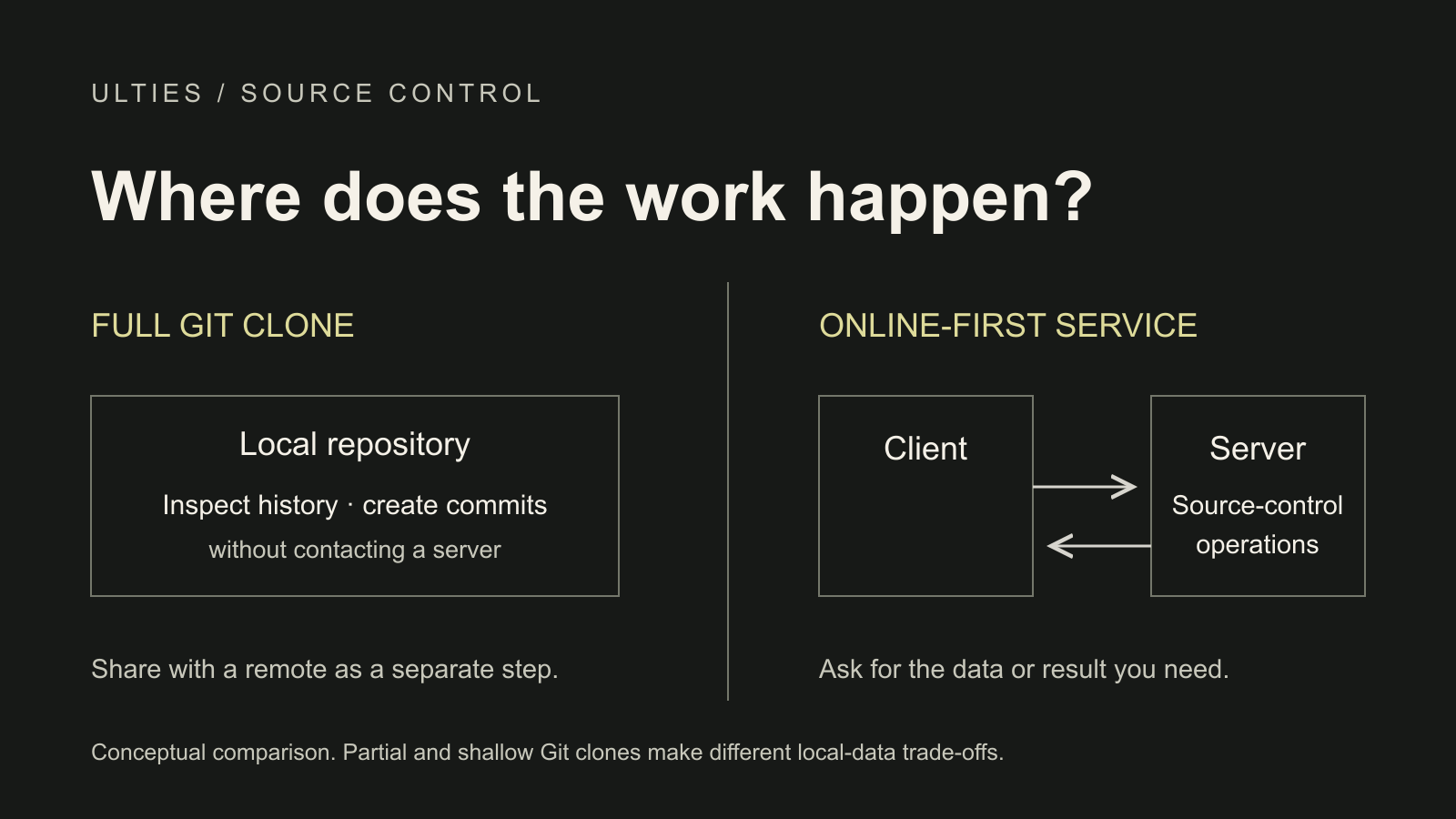
Git gives each developer a local repository. A server-centred design makes a different bargain. Here is what changes, and how to decide whether that trade-off fits your work.
Loading
Worked examples and practical decisions for people commissioning software and the developers building it.
64 articles
RSS feed
Git gives each developer a local repository. A server-centred design makes a different bargain. Here is what changes, and how to decide whether that trade-off fits your work.

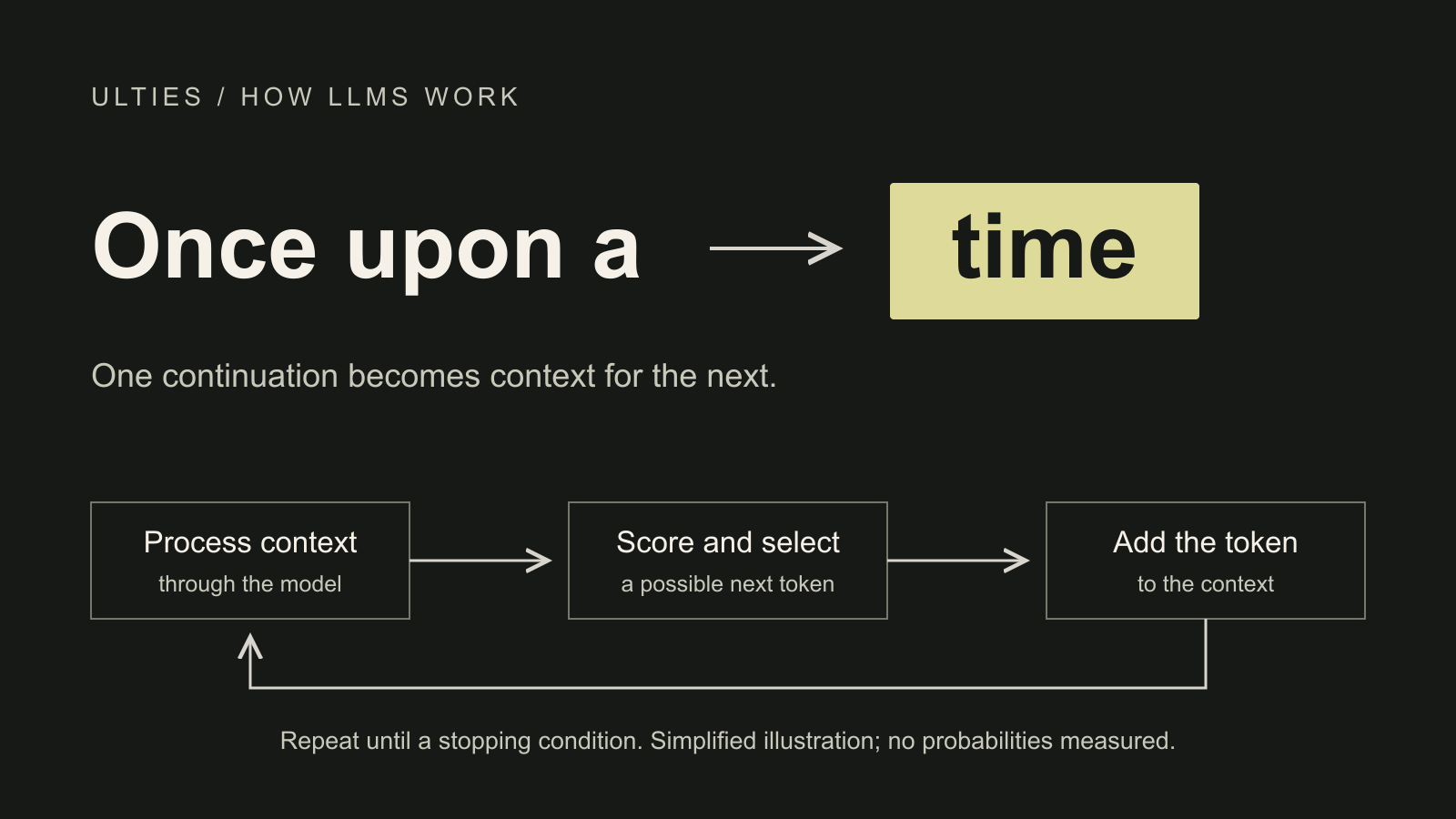
An AI can finish a familiar phrase and write a moving answer about fear. Following the text-generation process explains the connection—and the limits of what either answer tells us.

Compare real PHP and compiled TypePHP results: null array keys, entry points, strict typing, runtime dependencies and the limits of a pinned compatibility test.

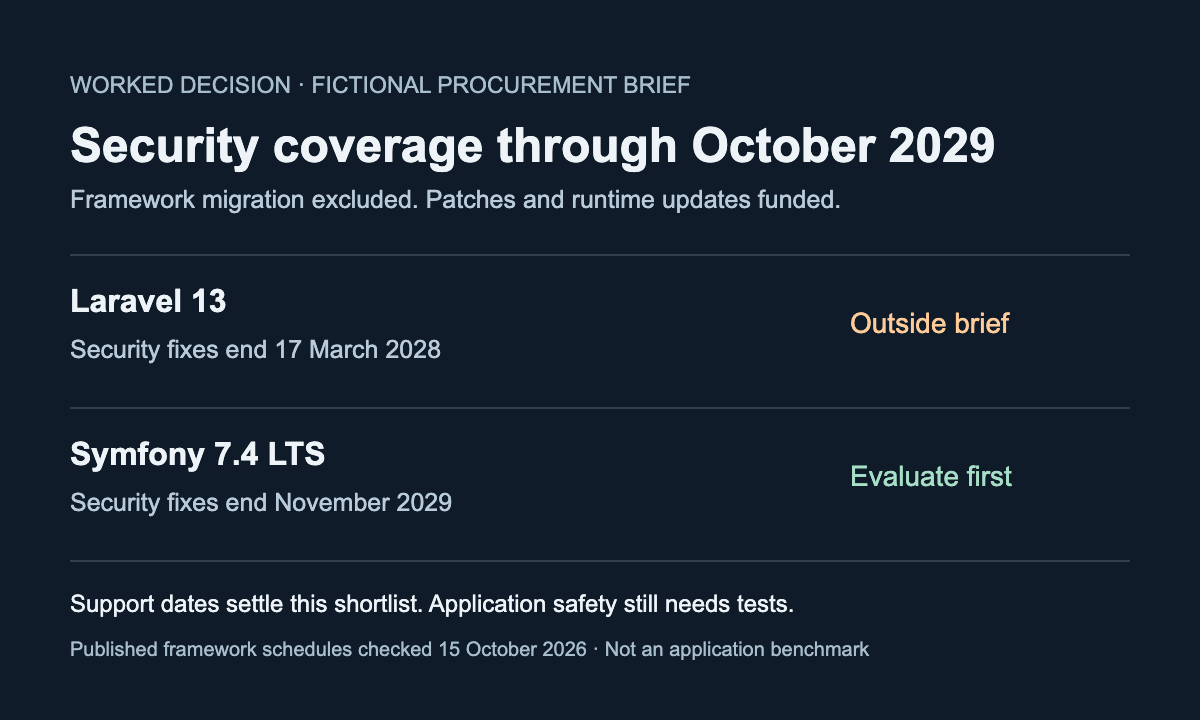
A worked Laravel 13 versus Symfony 7.4 decision: support deadlines narrow the shortlist, while an interrupted export exposes the queue design still needed.

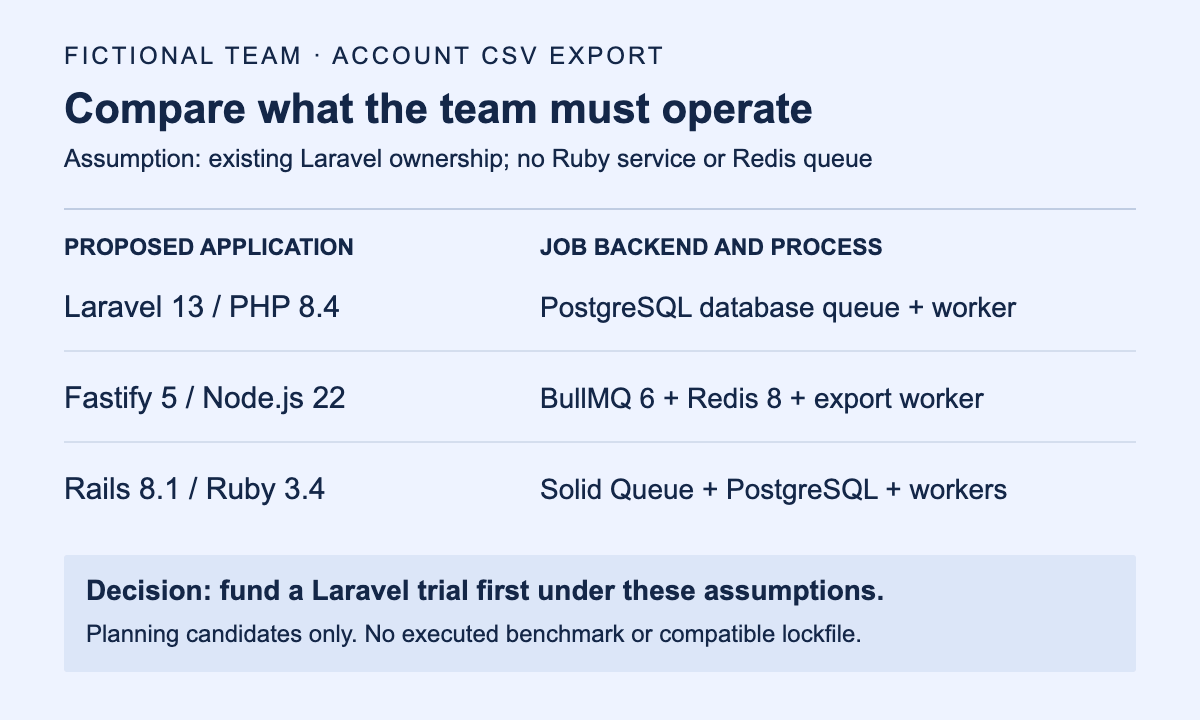
A worked stack decision for an account export: compare Laravel, Fastify and Rails against worker recovery, download permissions and operational ownership.

The same constructor resolves differently across three locked Laravel versions. A runnable fixture exposes the failure, required-dependency fix and explicit-binding exception.

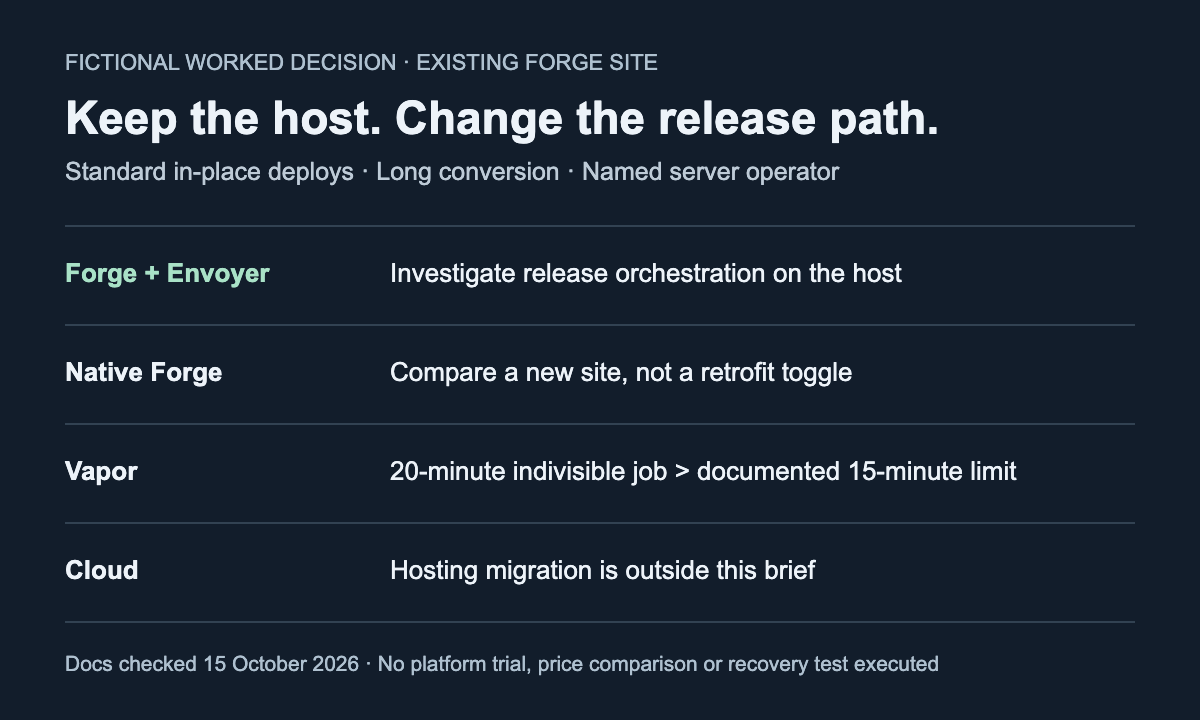
A worked release decision separates Forge and Envoyer from an infrastructure move to Vapor or Cloud, with current worker and deployment constraints.

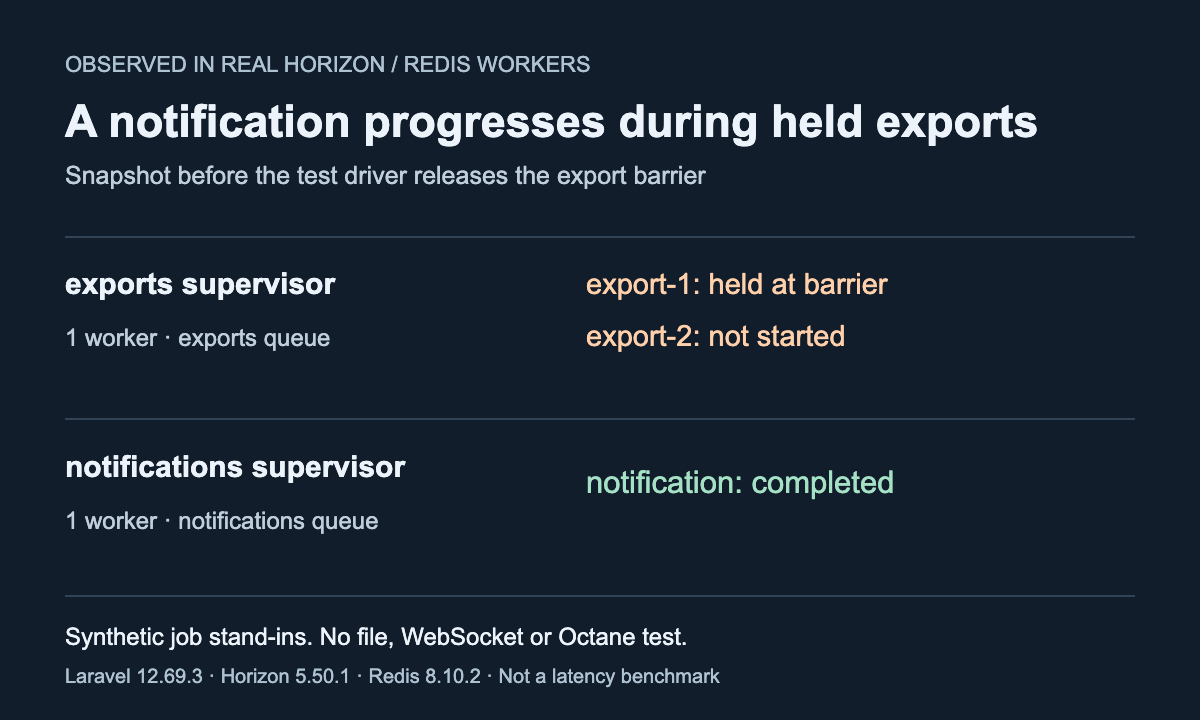
A real Horizon/Redis experiment verifies notification progress during an export backlog, while keeping Reverb delivery and Octane request lifetime claims separate.

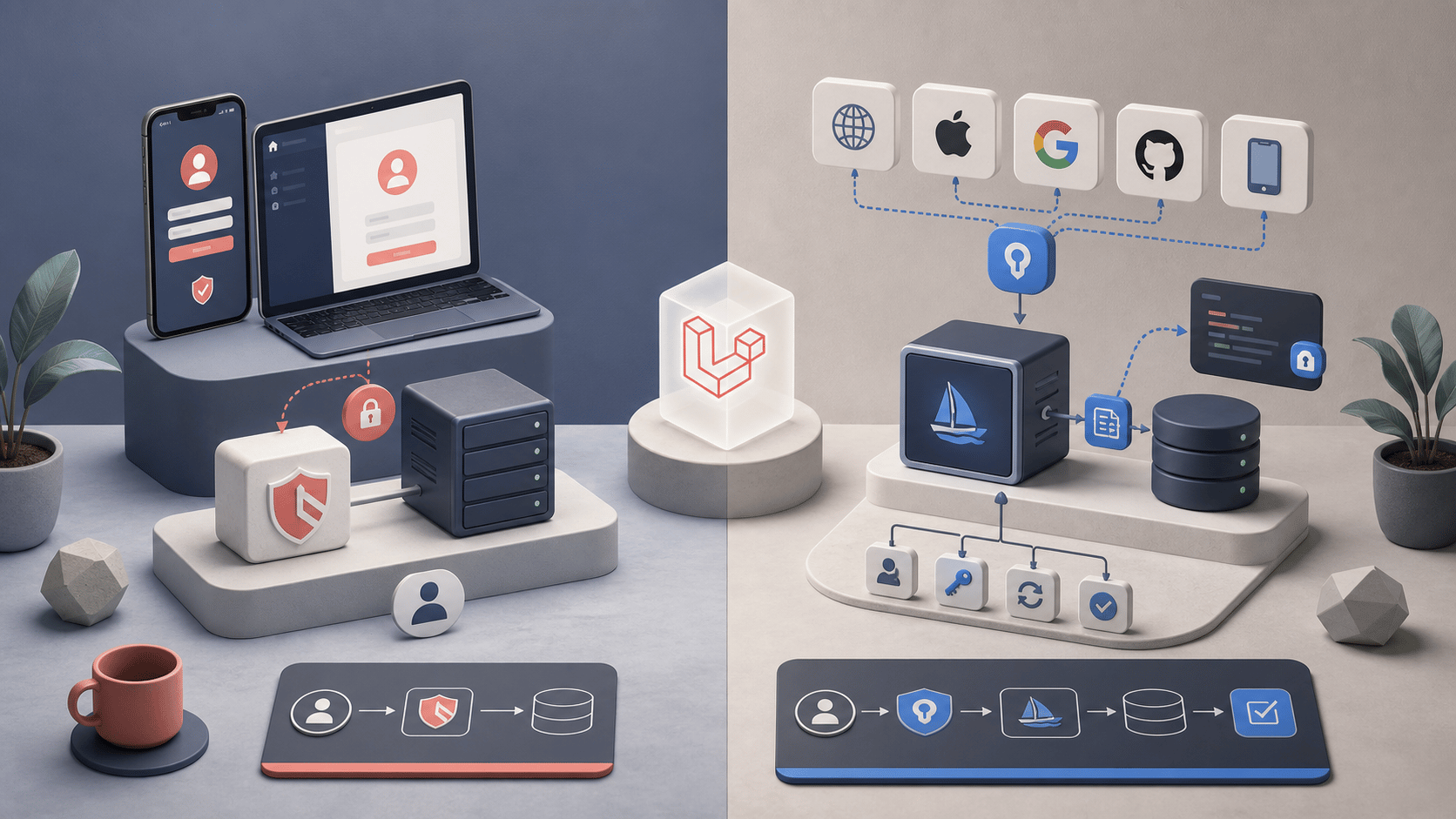
Choose between session authentication, personal tokens, and OAuth delegation while keeping resource authorization explicit.

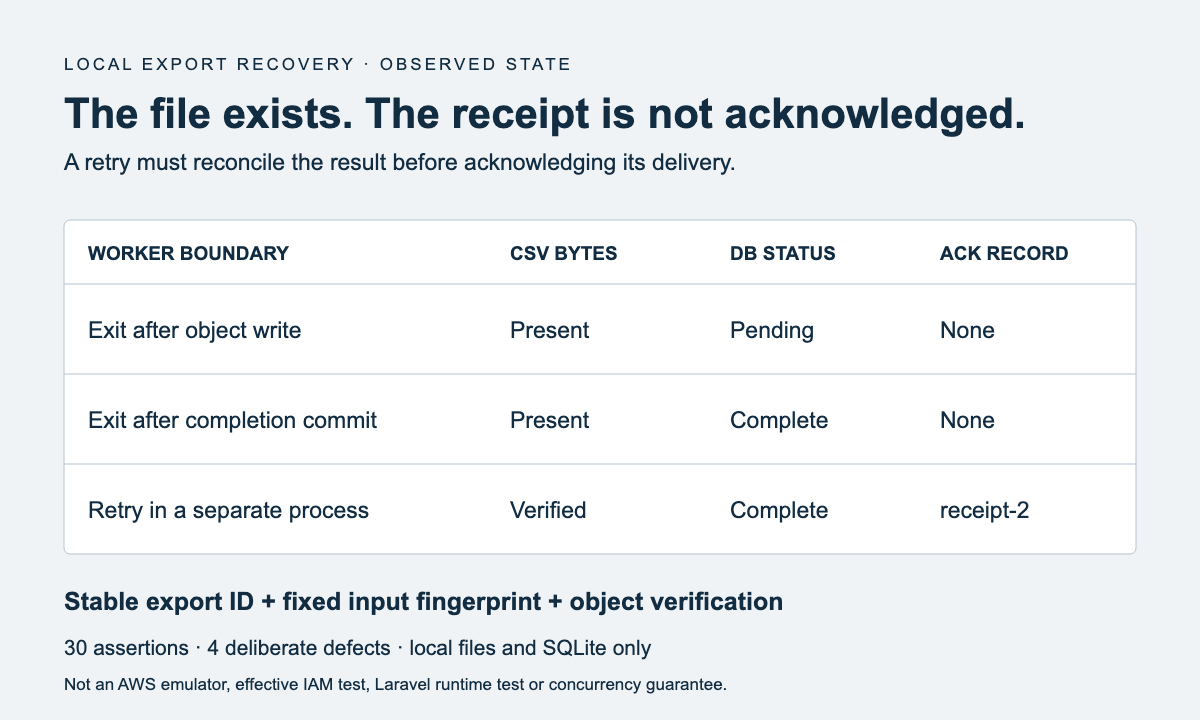
Trace an export worker’s output-before-acknowledgement failure, then separate application recovery from SQS delivery and IAM permissions.

A failed plan can leave an older artifact behind. Test plan errors and resource-address changes before adding Terraform wrappers or modules.

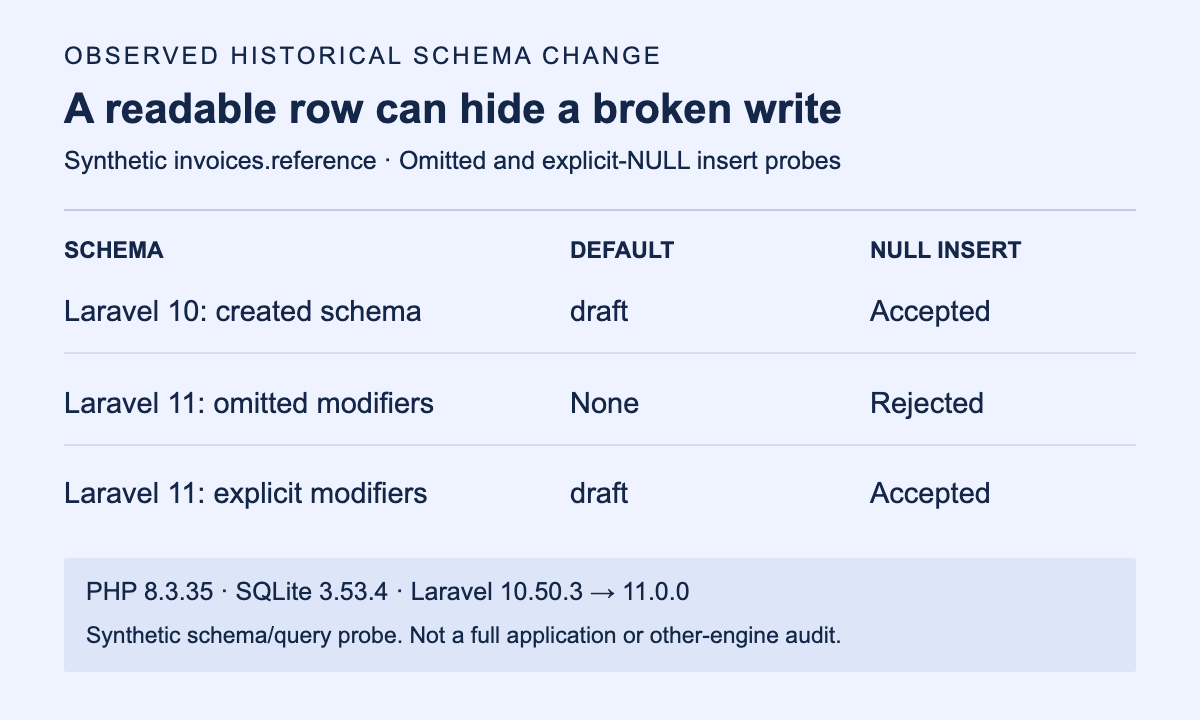
Use captured schema and write behavior to turn a release-note warning into a concrete upgrade stop condition.

A replacement token can work while a forgotten worker still depends on the old one. Reproduce that failure, verify narrow permissions, and test revocation explicitly.

A timer can stop while the interface still says Loading. Reproduce that boundary error, preserve application failures, and choose what completion means before comparing latency.

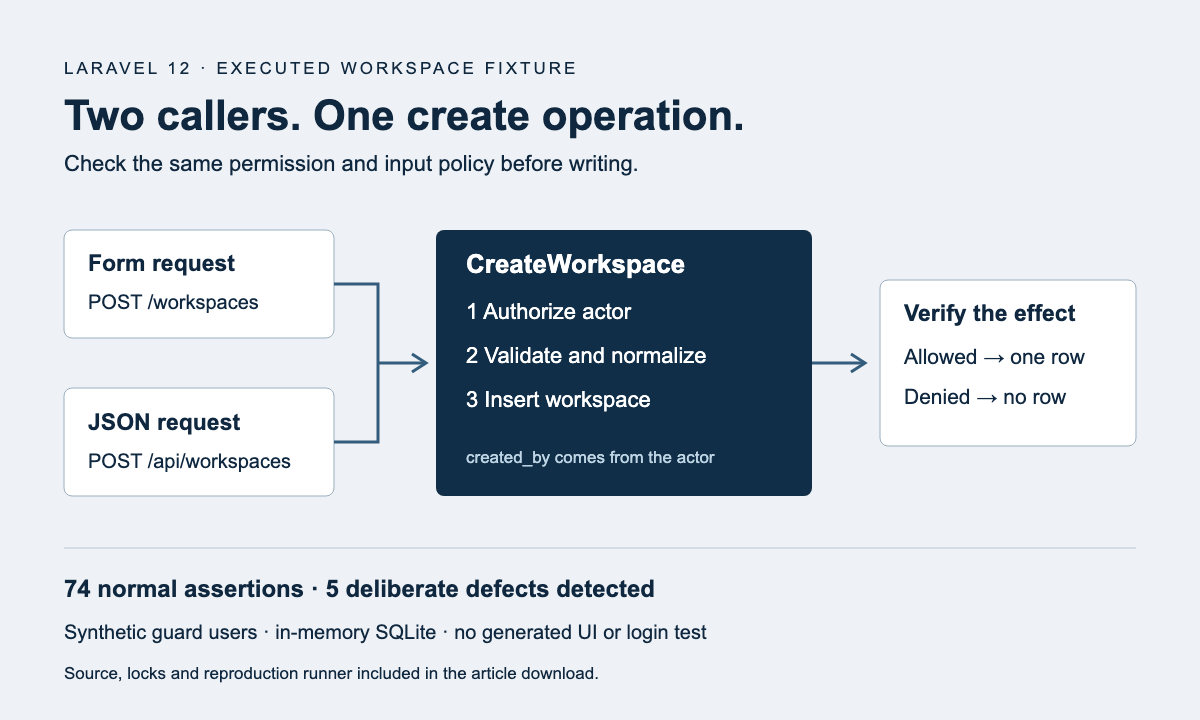
Test a Laravel starter kit by keeping one workspace operation consistent across form and JSON requests, including permission denial and input normalization.

Prioritize technical debt using demonstrated operational cost, data risk, and blocked changes, then define a repair small enough to verify.

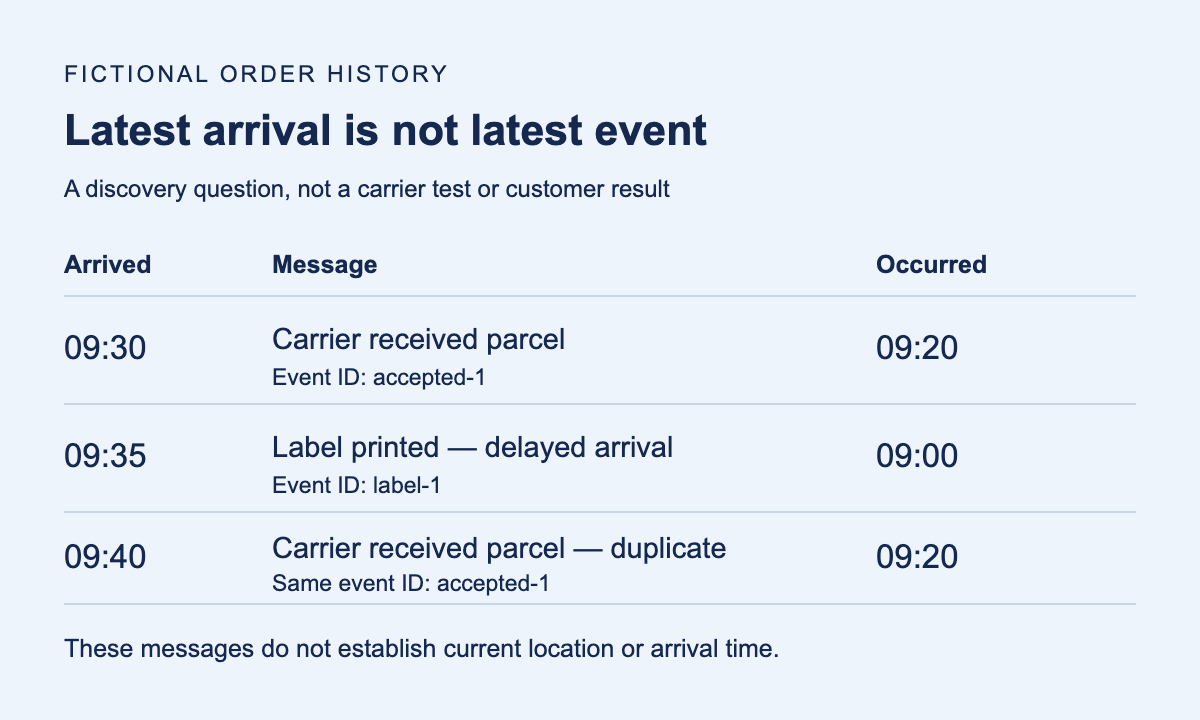
Use discovery to test a costly assumption, map operational constraints, and make an explicit build, change, or stop decision.

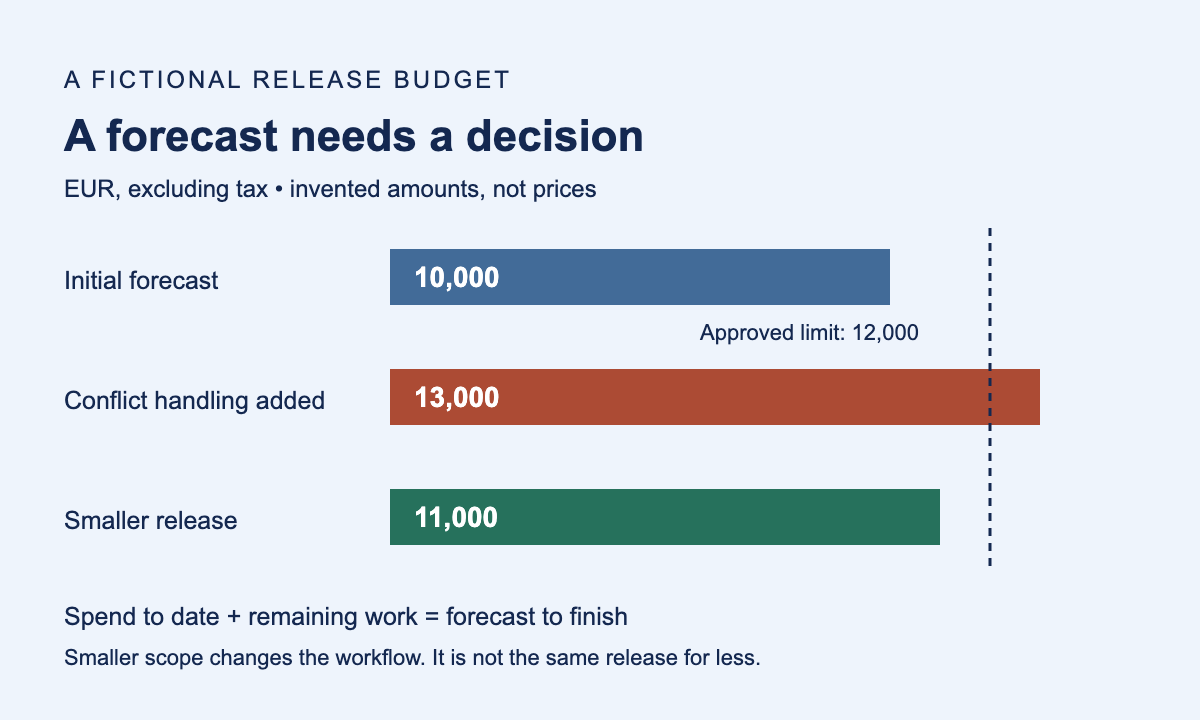
Build a software budget from delivery assumptions, named risks, operating costs, and explicit decisions about what happens when scope changes.

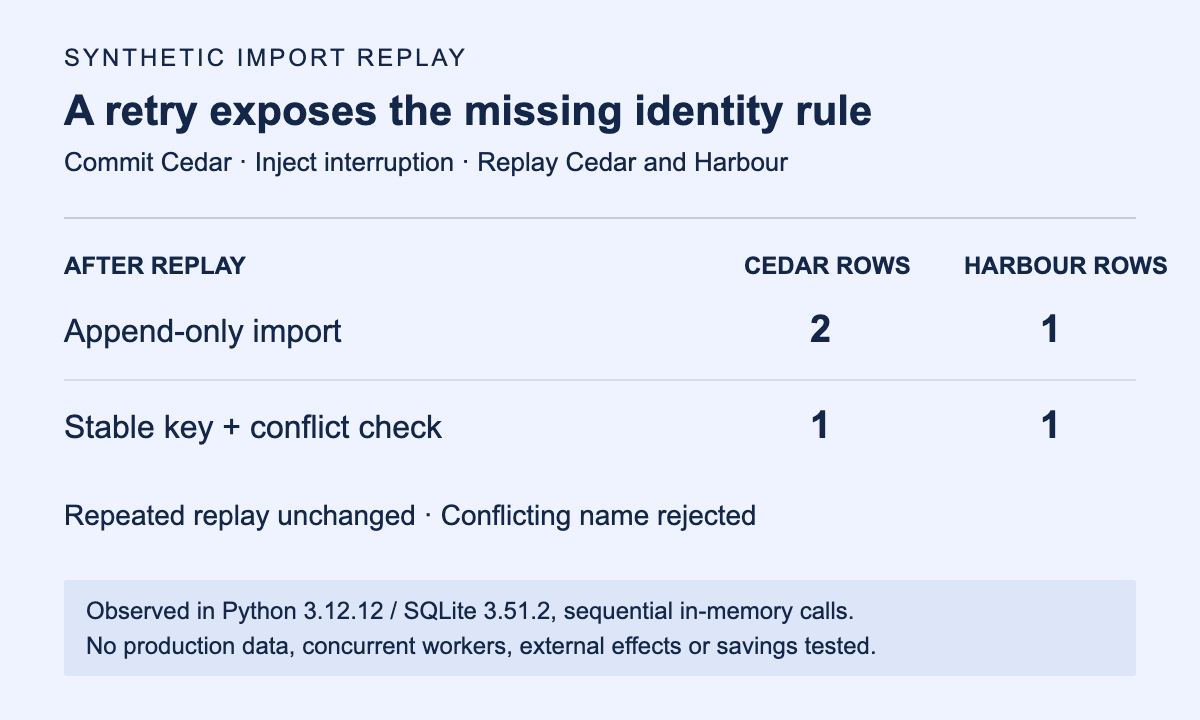
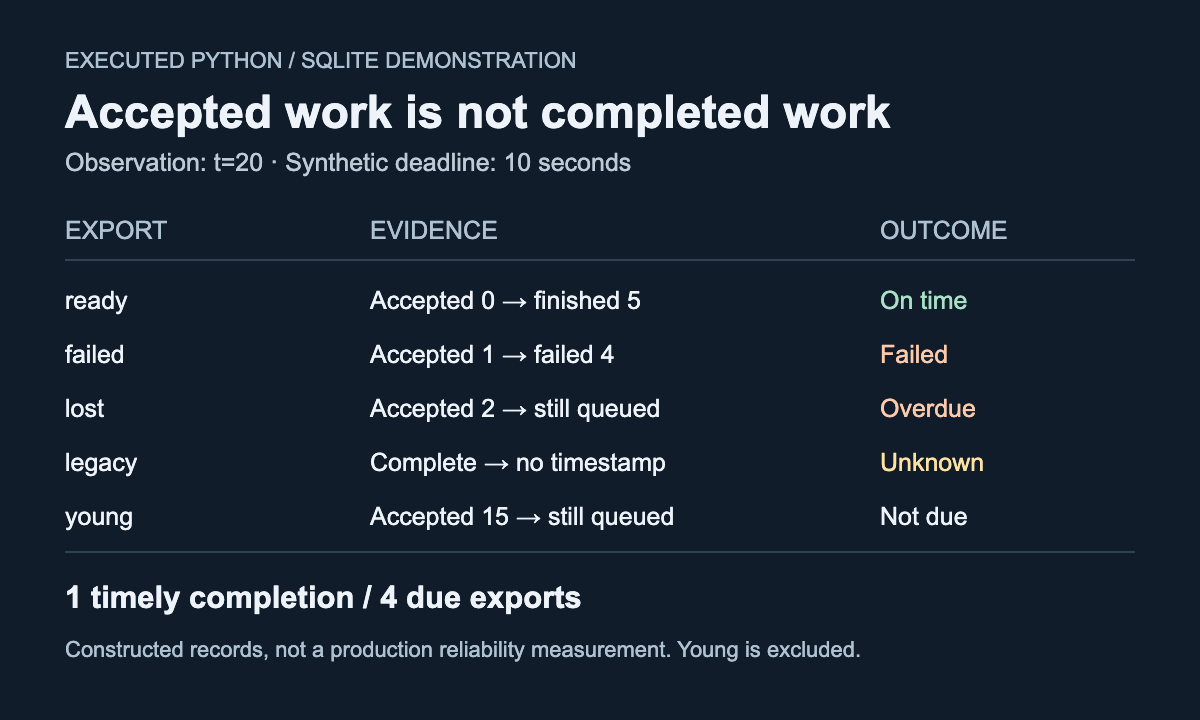
An executed Python/SQLite change shows why accepted work, timely completion and unknown outcomes need separate evidence.

Use a small input boundary and focused tests to make data contracts, error behavior, and future changes easier to reason about.

Try three focused PHP 8.5 examples, understand their limits, and keep runtime adoption separate from syntax changes.

Understand why an update can now fail on an advisory, inspect the locked dependency graph, and review repository configuration as a trust decision.

A reproducible Python workflow checks account scope, tool proposals, retries and category gates without claiming to measure model reliability.

Use a reproducible order-and-outbox example to see which failures a local transaction prevents, and which still need retry and recovery decisions.

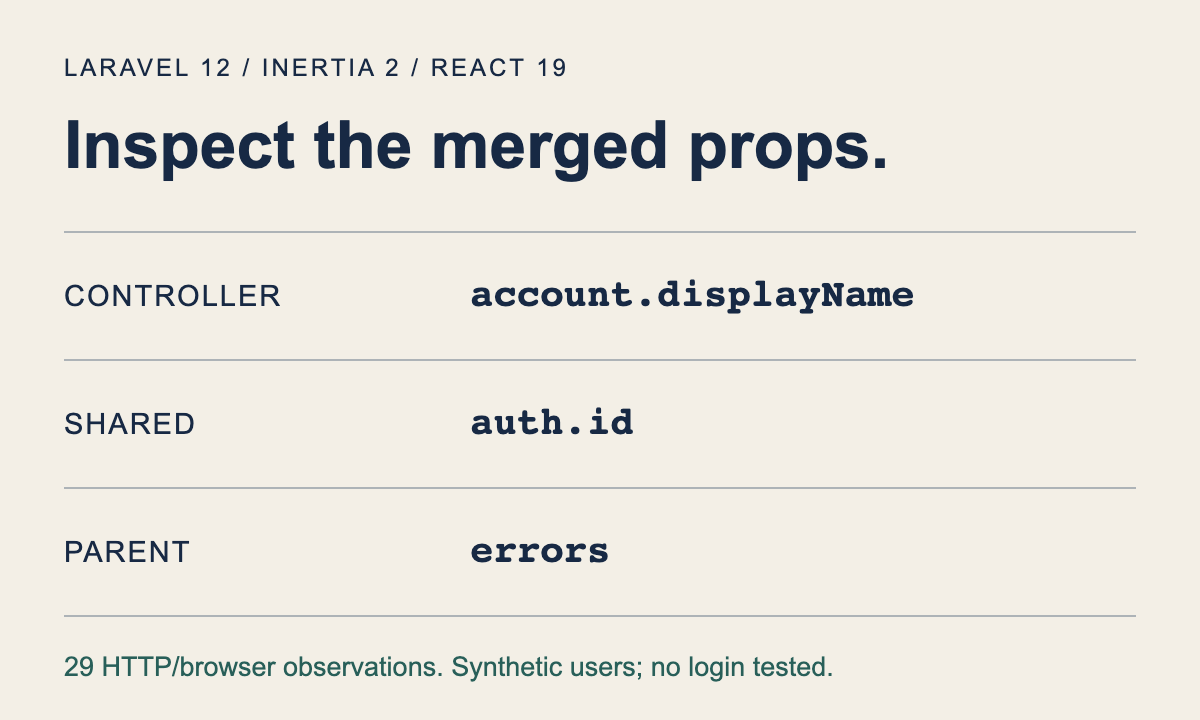
Choose between Livewire and React with Inertia under explicit team constraints, then inspect a real account response, shared props and React page resolution.

A signed gateway assertion still needs an application permission check. Reproduce the allowed request, cross-customer denial, and revocation of an already issued assertion.

A tested draft-editing workflow shows where Filament and a custom endpoint share business rules, and how an alternate save action can bypass conflict checks.

A tested button and report form show who owns submission, pending state, errors and focus—and how a safer default can break a consumer.

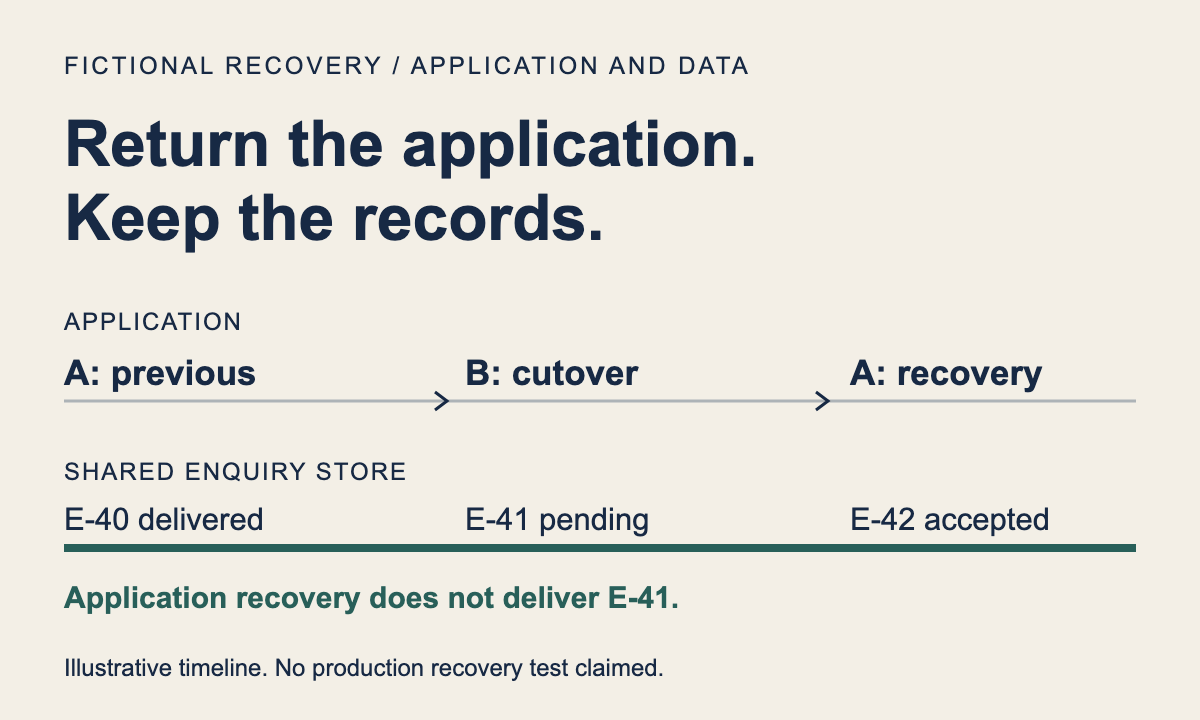
Follow a fictional enquiry from acceptance through delayed CRM delivery and application rollback, then use those boundaries to plan a redesign release.

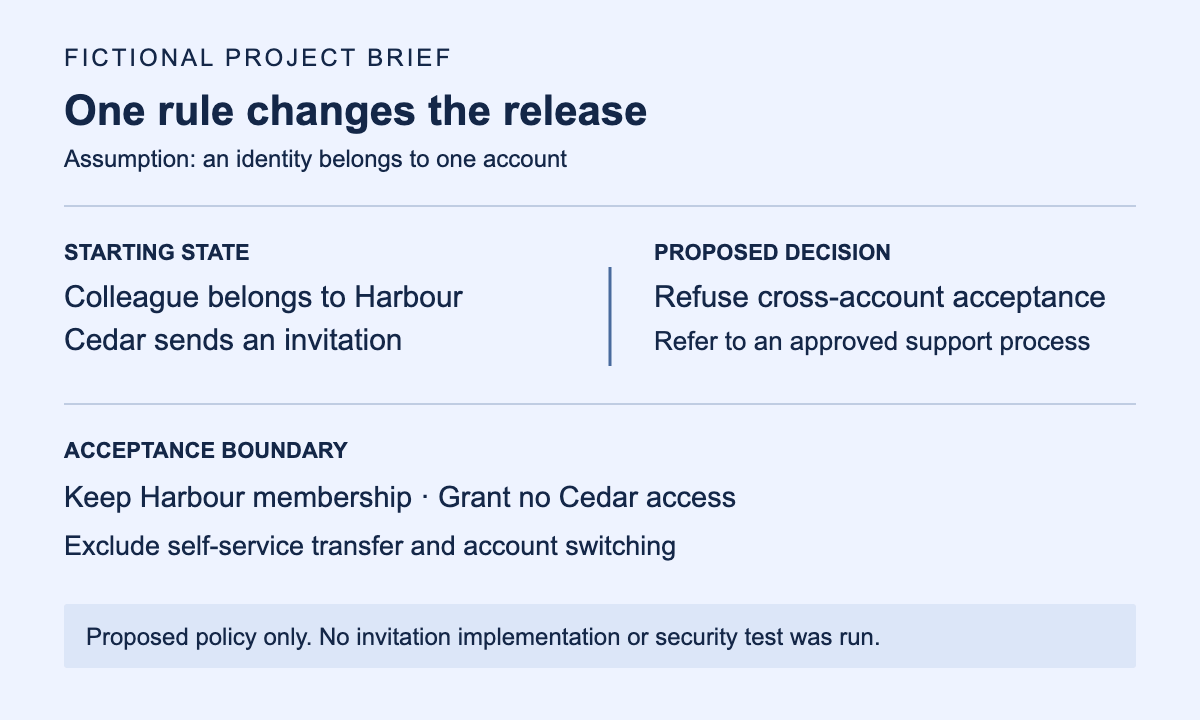
Use a fictional invitation feature to connect scope decisions to acceptance criteria, then distinguish release readiness from product results.

Compile and render a pinned component, catch a mask placed on the wrong ancestor, and inspect what survives when its visual effects disappear.

A real SQLite fixture shows how stored decisions and local caches behave during a rollback, including the unseen scopes an old resolver can still enable.

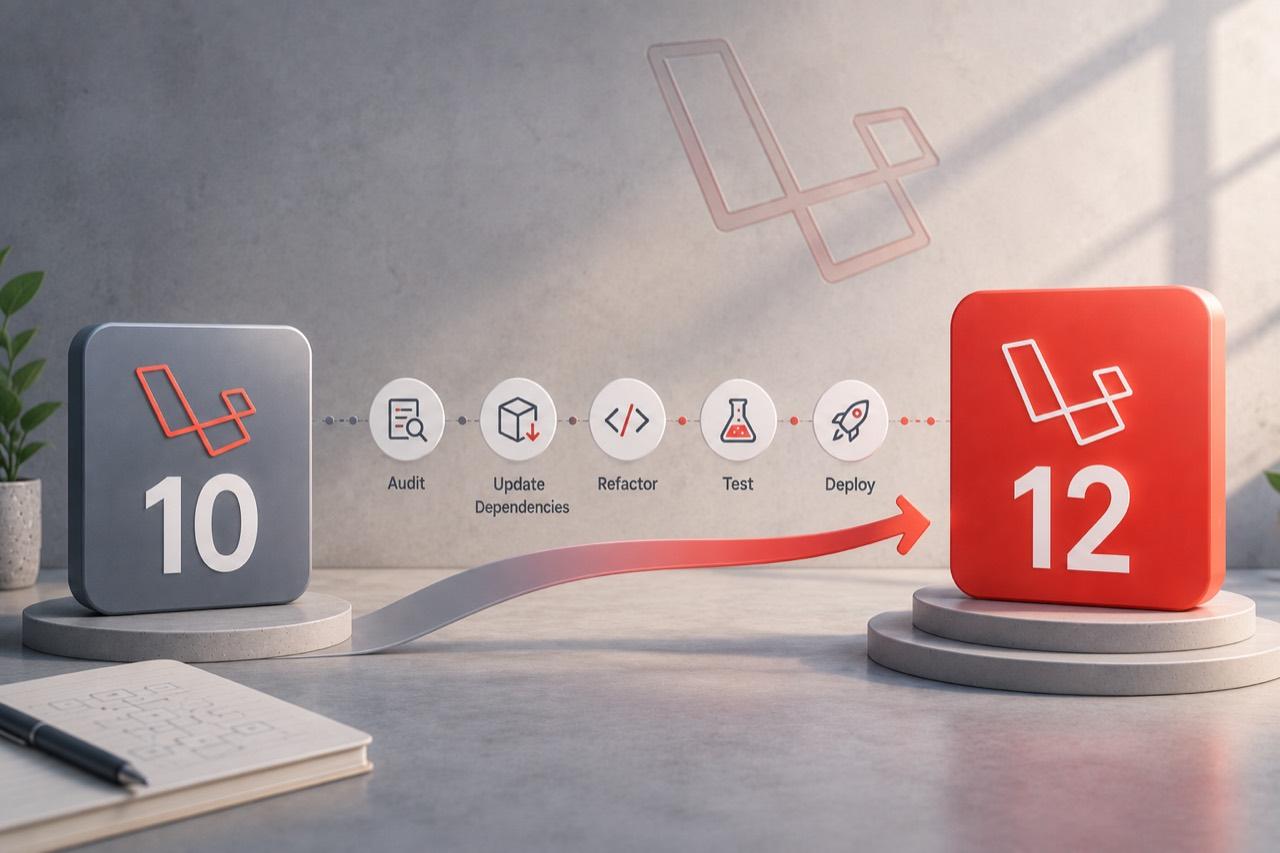
Keep starter-kit adoption separate from an upgrade. Reproduce when Laravel 12 keeps a null constructor default, when it still resolves a class, and which bindings take precedence.

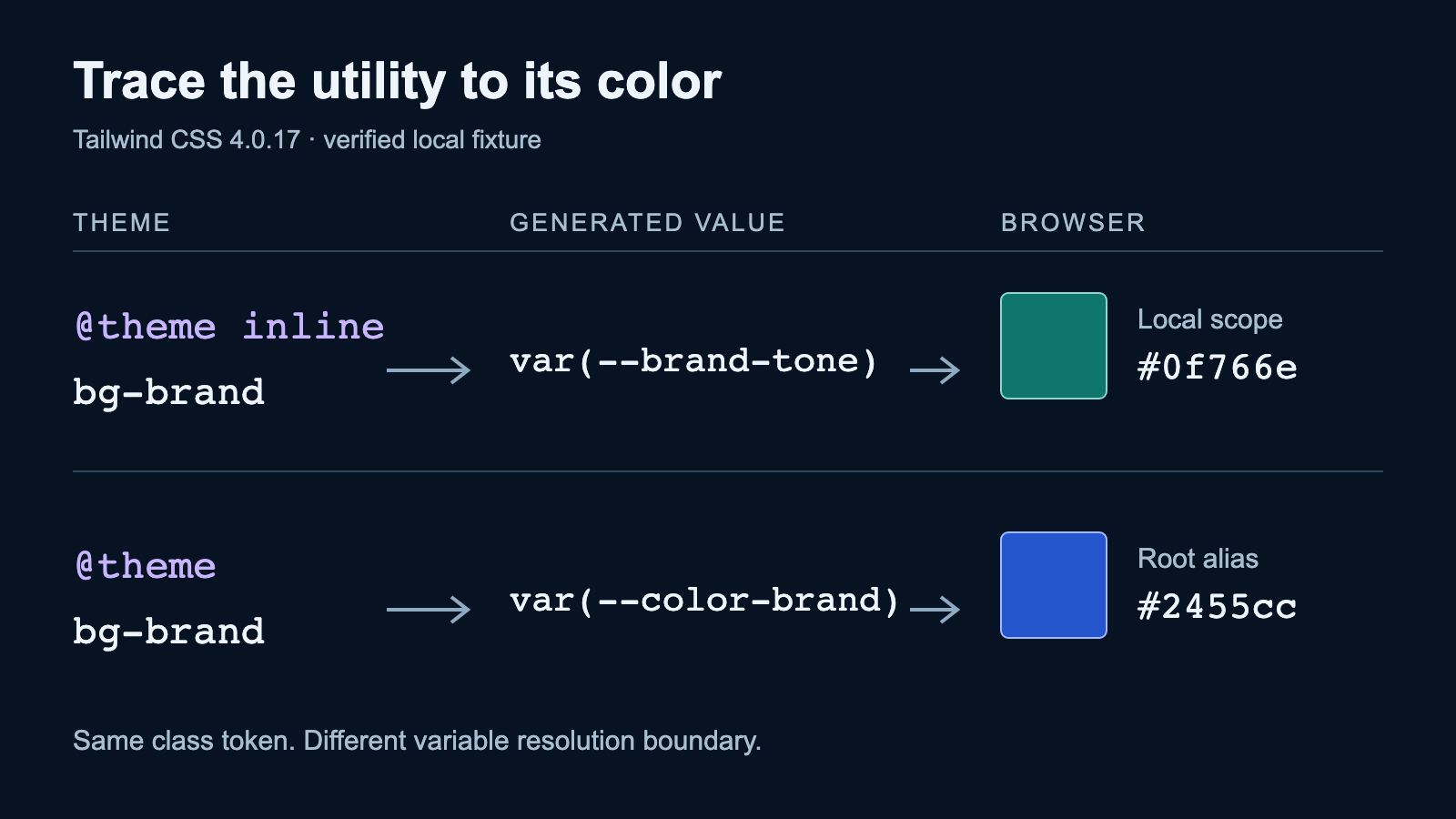
A compiled fixture separates source detection, theme registration and CSS variable scope, then checks a border default that can change the result.

Use a client form Action without losing the entered value after a failed save. Reproduce pending states, reset behavior and duplicate-submission limits.

Use property hooks to enforce local invariants, distinguish restricted writes from immutability, and test when a lazy object actually initializes.

A worked technical-review offer shows how scope, sample evidence and honest submission states help a buyer decide what to do next.

Reproduce a stale quantity after extracting rune state, distinguish getter reads from snapshots, and keep calculated totals in server-rendered output.
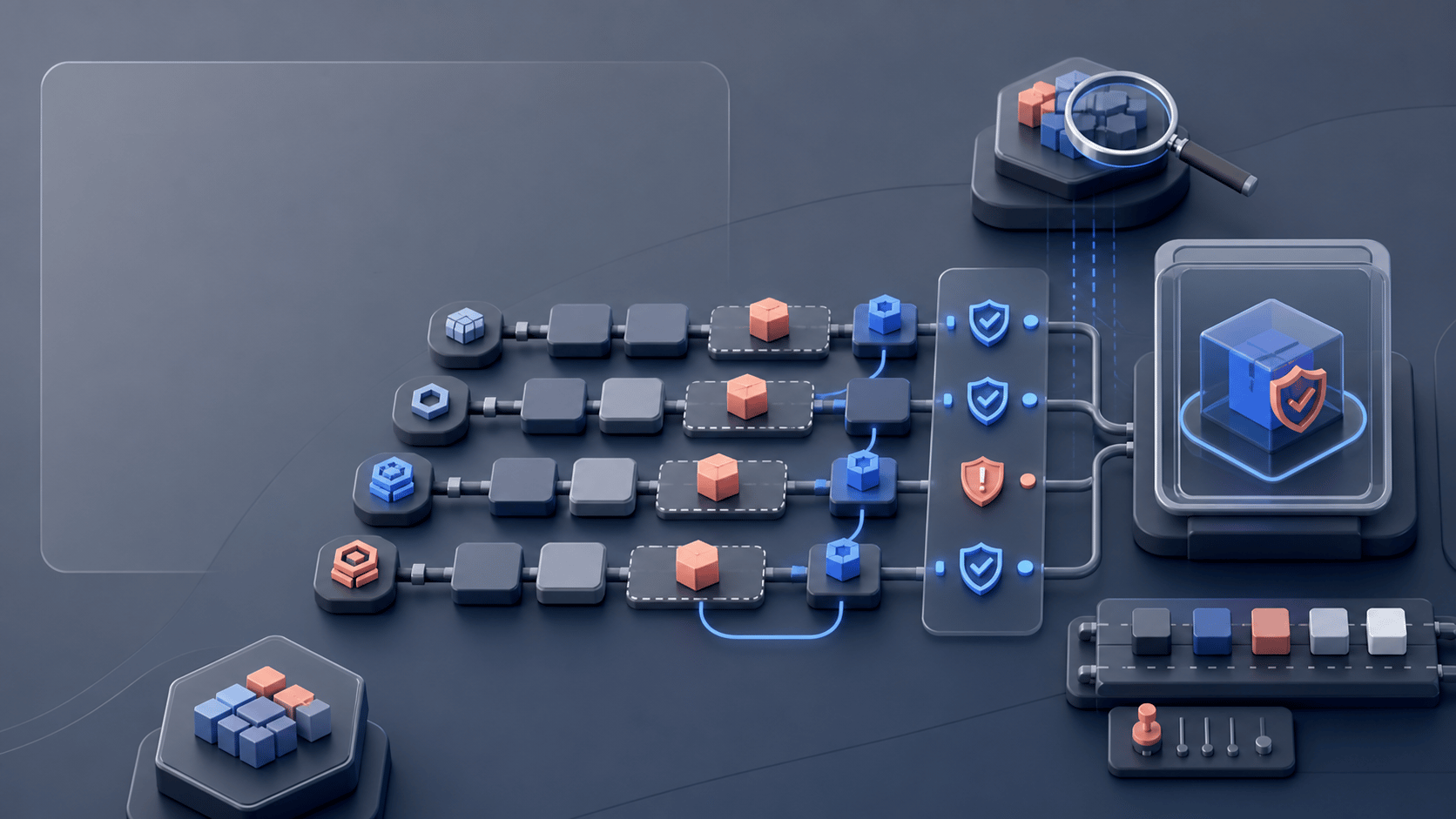
Use patch-only updates as a scope control, retain audit evidence, and detect ambiguous autoloading without treating a small version change as a safety guarantee.
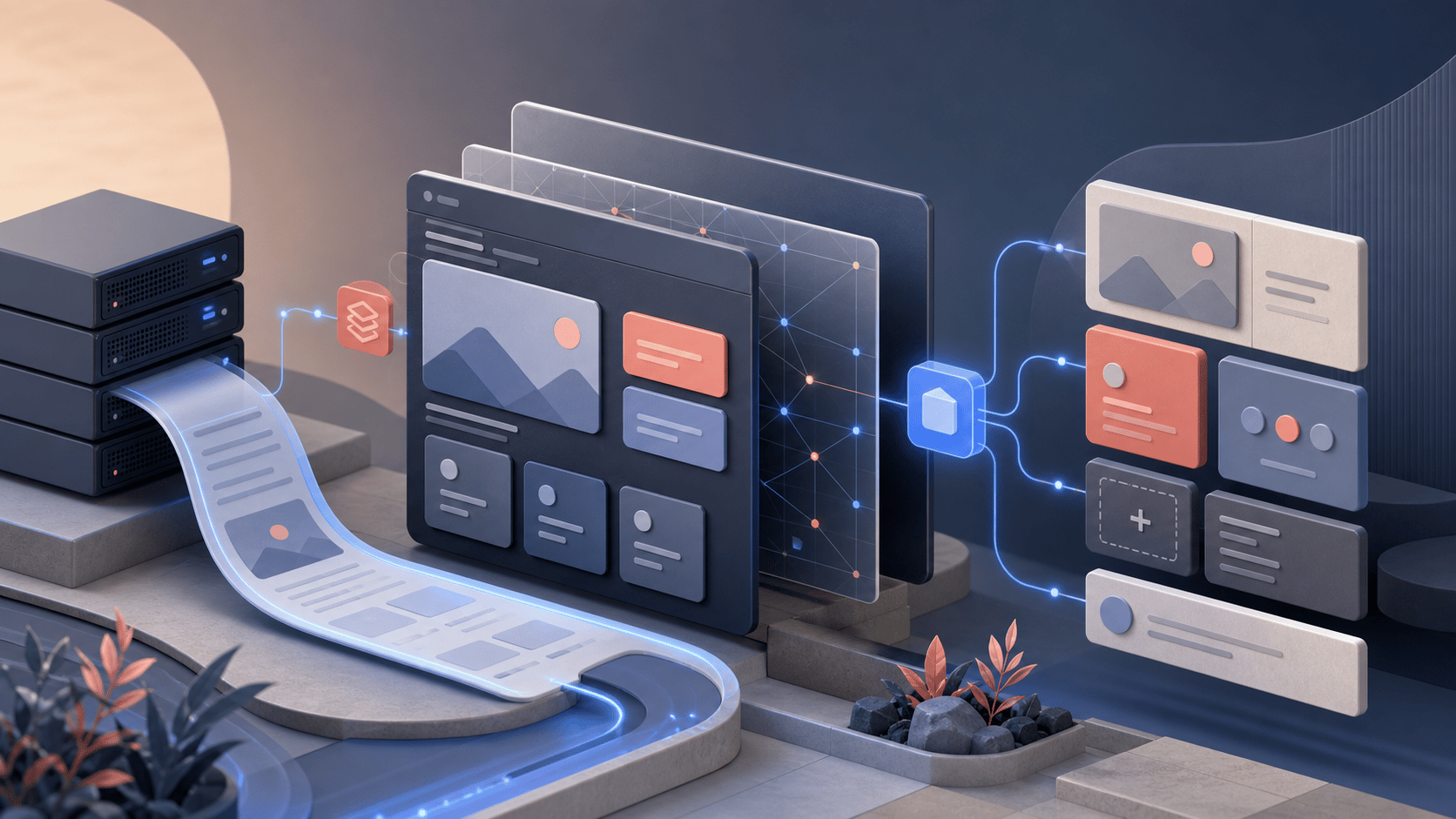
Use reactive props destructuring without losing updates, cancel obsolete requests, and give server-rendered controls consistent IDs.

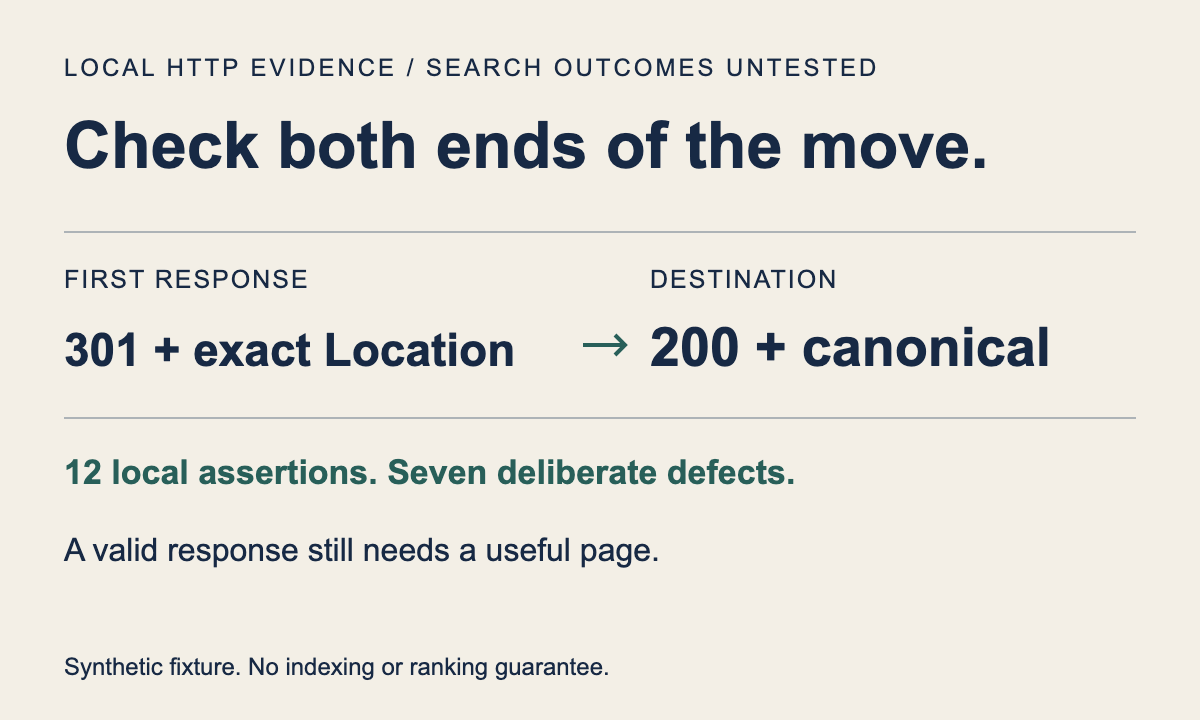
Run a local HTTP migration map, reject broken redirects and canonical markup, and keep response evidence separate from relevance and search outcomes.

Run the same invoice authorization test in Pest and PHPUnit, then break the application to see what each assertion protects.

Separate browser sessions from mobile bearer tokens, implement CSRF-aware login, and test authorization independently of token abilities.

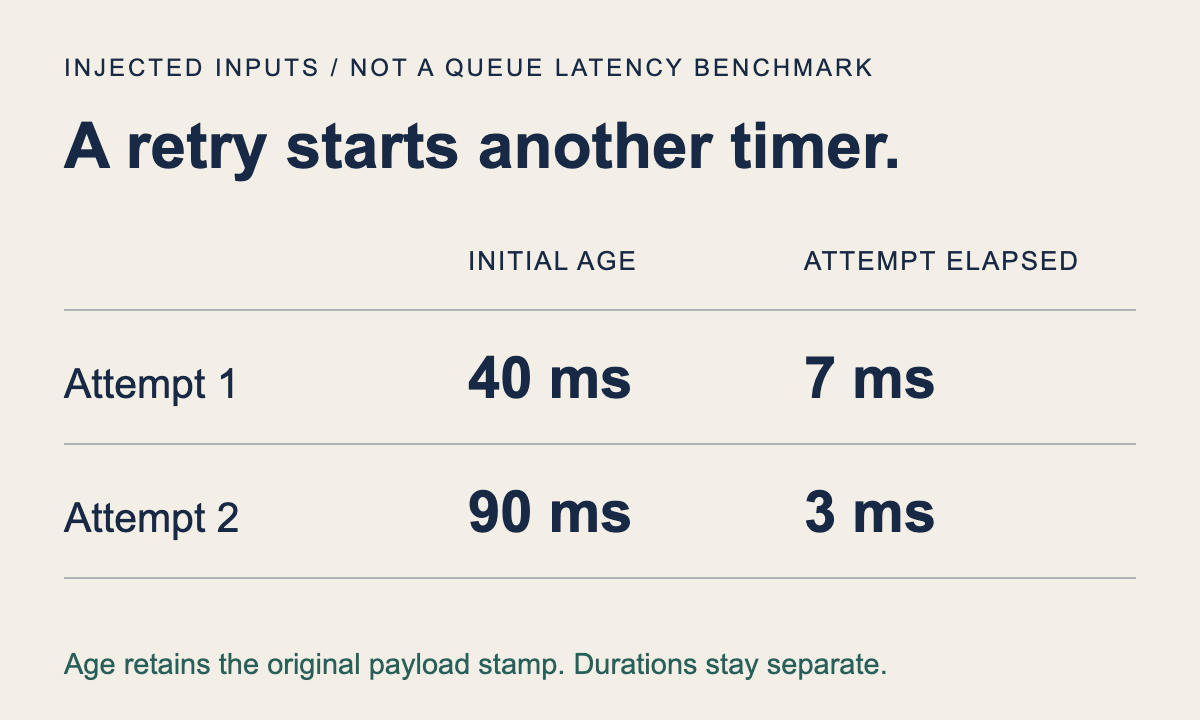
Trace initial dispatch age, per-attempt duration, retries and terminal failure with a tested Laravel observer, then verify what Horizon snapshots actually record.

Reproduce a warning added in React 18.3, fix it without losing the fallback value, and test root migration beyond a quiet console.

Trace the health event through a real Laravel HTTP kernel, then expose two defects that report success while a synthetic dependency is broken.

Understand the February 2024 security fix, preview focused dependency updates, and account for Composer 2.7's abandoned-package audit policy.

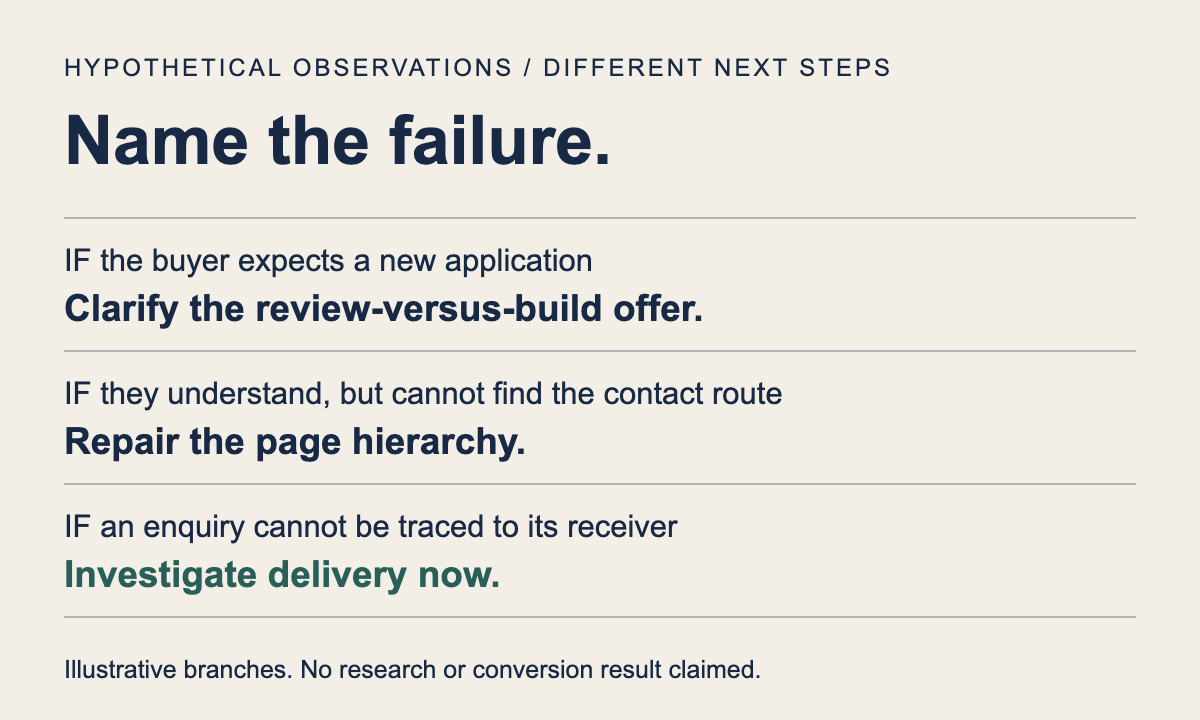
Use a fictional before-and-after service offer to separate an unclear proposition from a usability defect, and decide what must be settled before redesigning pages.

Trace a component model from input to parent, reproduce missing-update failures, and see which computed consumers rerun in Vue 3.4.

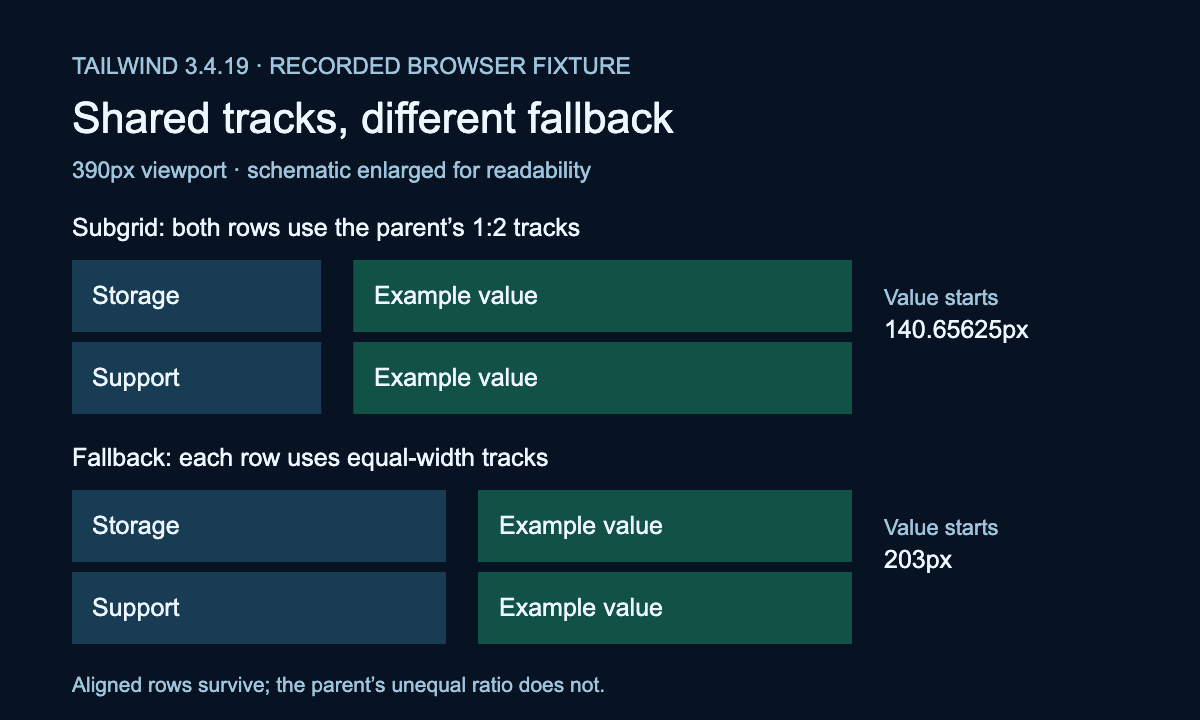
Trace Tailwind 3.4 layout utilities through compiled CSS and a native form, with a pinned browser fixture for resizing, subgrid and missing source paths.

Strengthen class contracts with typed constants and Override, and avoid parsing JSON twice when decoding is already required.

Turn a feature request into a buildable brief with users, release boundaries, integration ownership, and testable success and failure cases.

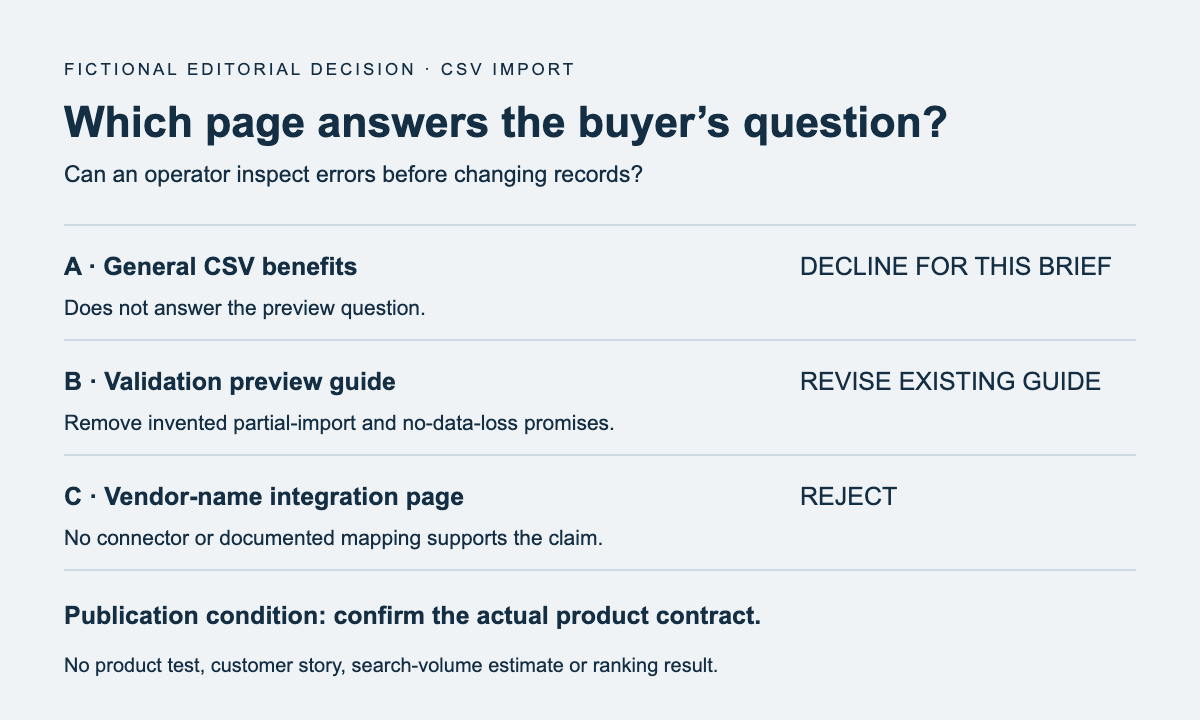
A worked editorial decision shows which CSV-import page to revise, which drafts to reject, and what search data cannot tell you about sales.

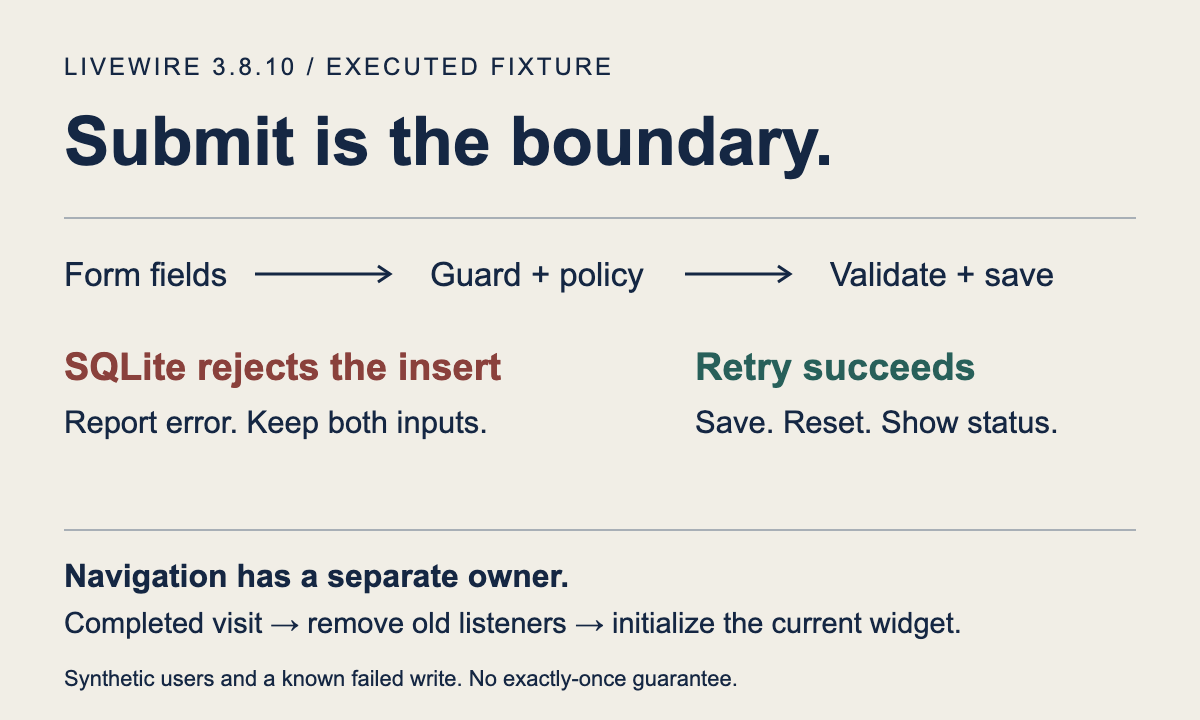
Follow a tested Livewire 3 form through validation, authorization, a failed write and retry, then inspect listener cleanup across real browser navigation.

Compare a focused repair with a rebuild, then use real HTTP outcomes to distinguish preserved pages, redirects and removed content before launch.

Reproduce a stale filter caused by a hidden dependency, then observe which nested-block changes trigger local and global transitions.

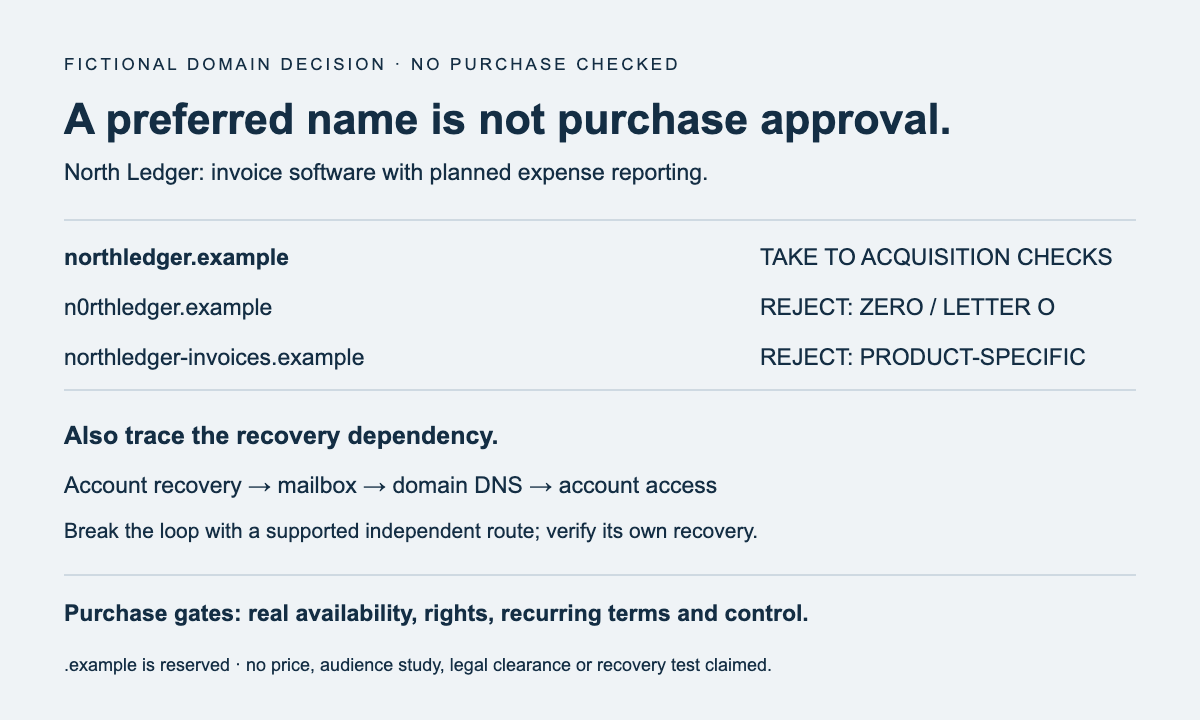
A worked shortlist separates a naming preference from purchase approval, then traces the account-recovery loop a business should avoid.

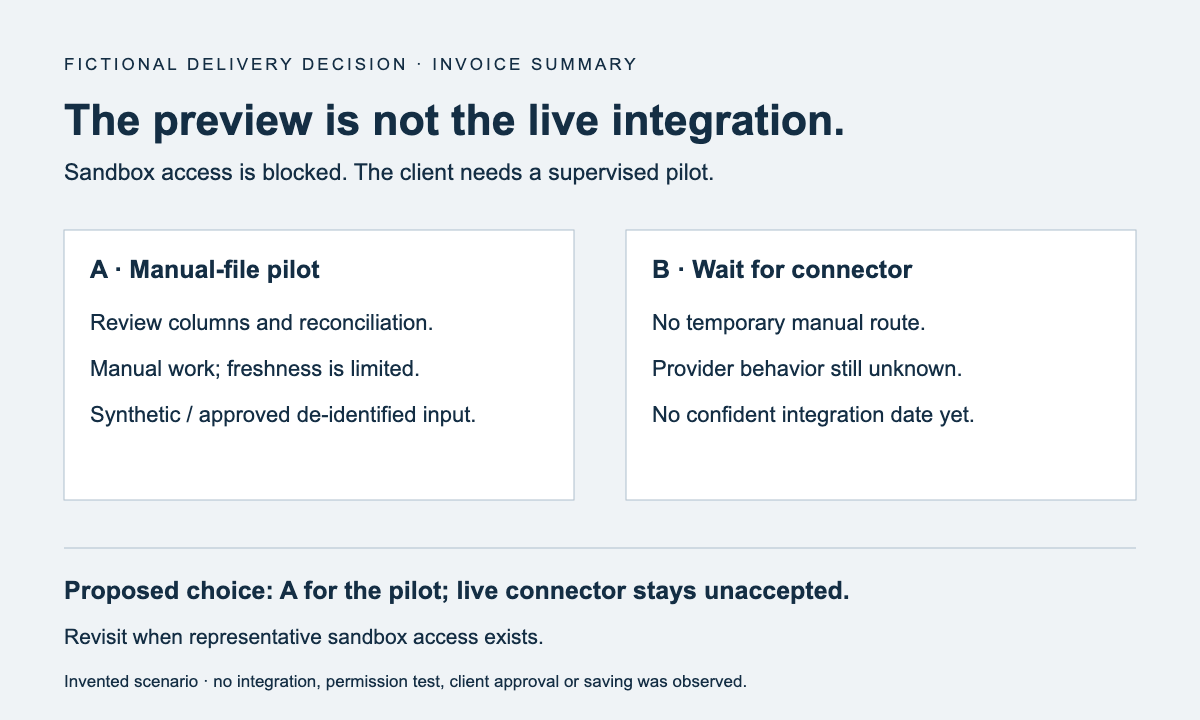
A worked project update shows how to expose a blocked integration, compare two delivery choices and agree what can actually be accepted.

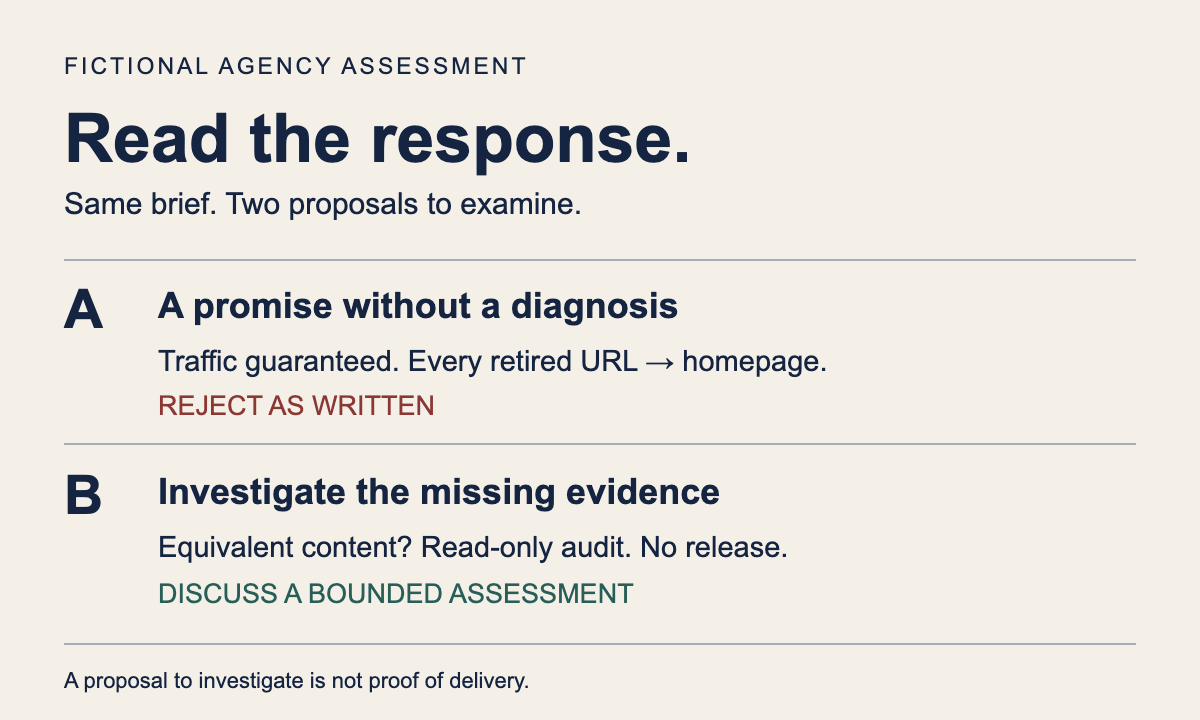
Compare fictional agency responses to the same page-migration brief, reject unsupported promises, and decide what evidence is needed before commissioning delivery.

A real CSV subprocess shows why exit status must be checked before decoding output, with timeout tests and deliberately broken variants.

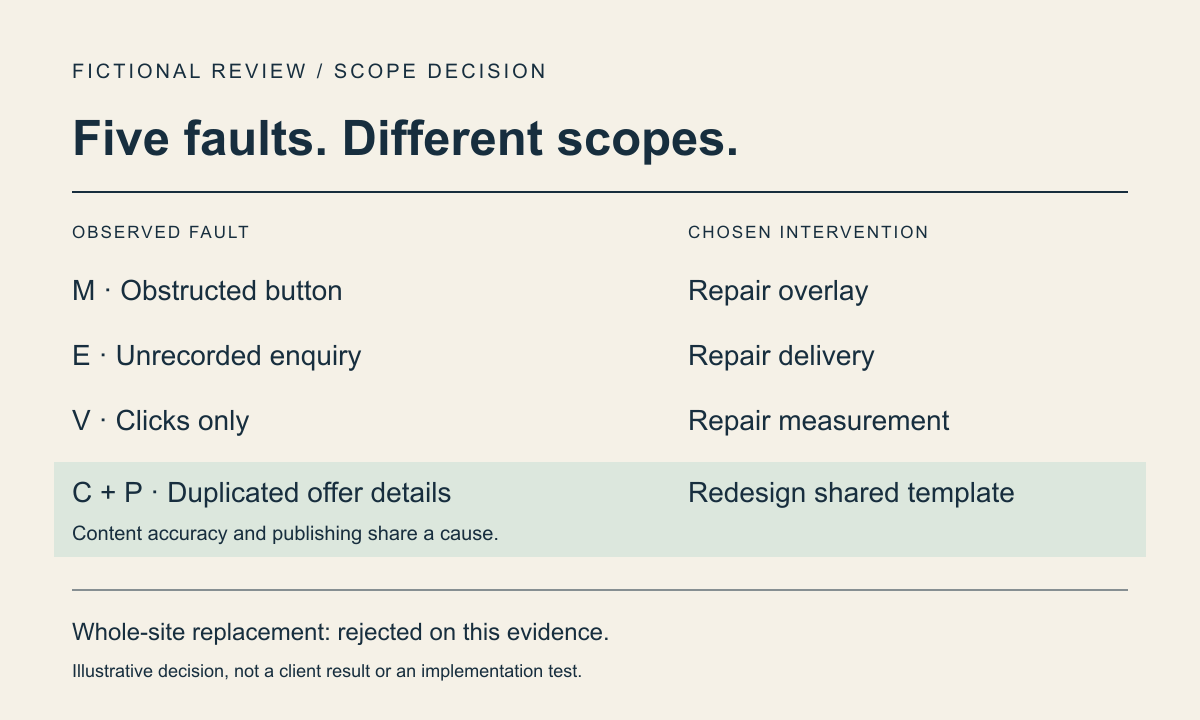
Work through a fictional website review to separate urgent enquiry repairs, content corrections and a justified shared-template redesign.

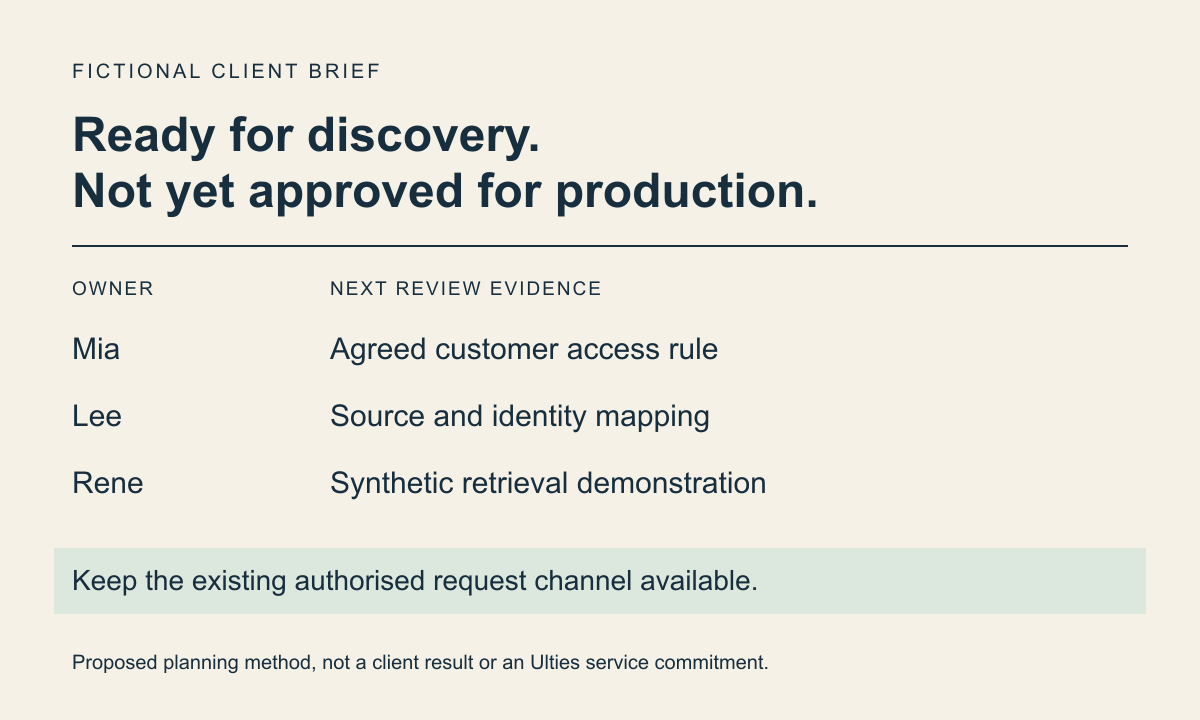
Bring a completed discovery brief: the customer task, excluded scope, owned unknowns and the evidence needed before committing to a production portal.

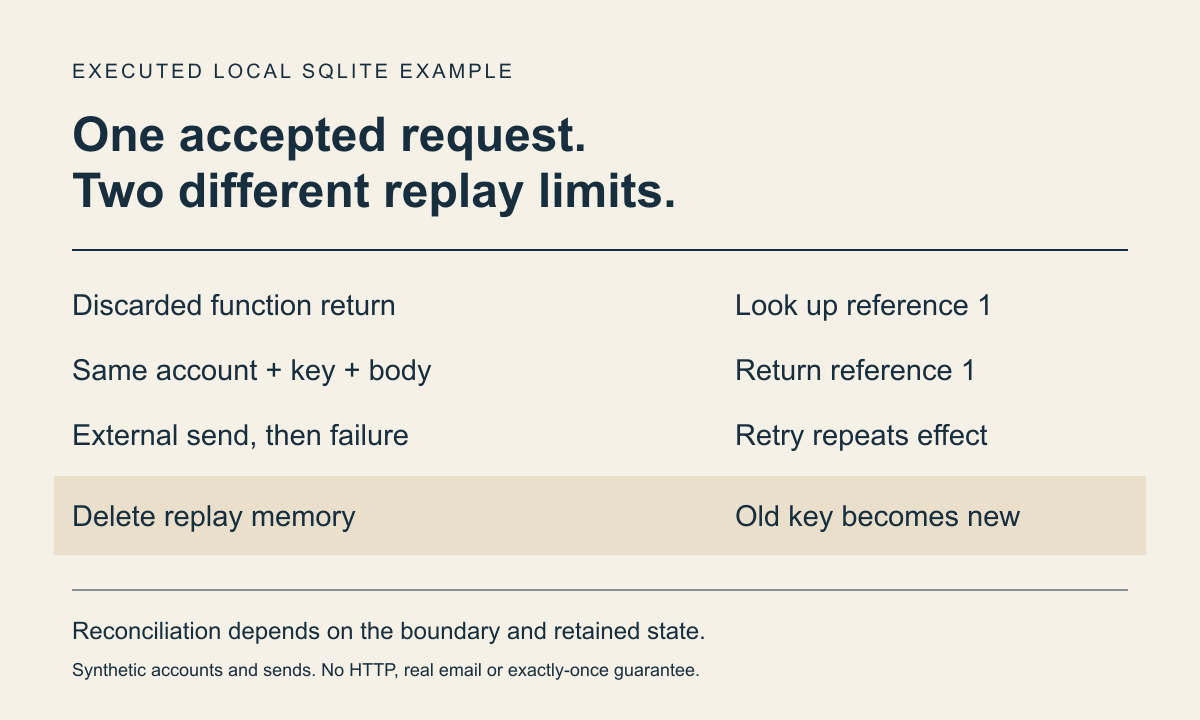
A tested SQLite request boundary shows what to preserve as a product changes: account-scoped reconciliation, atomic notification intent and explicit replay limits.